
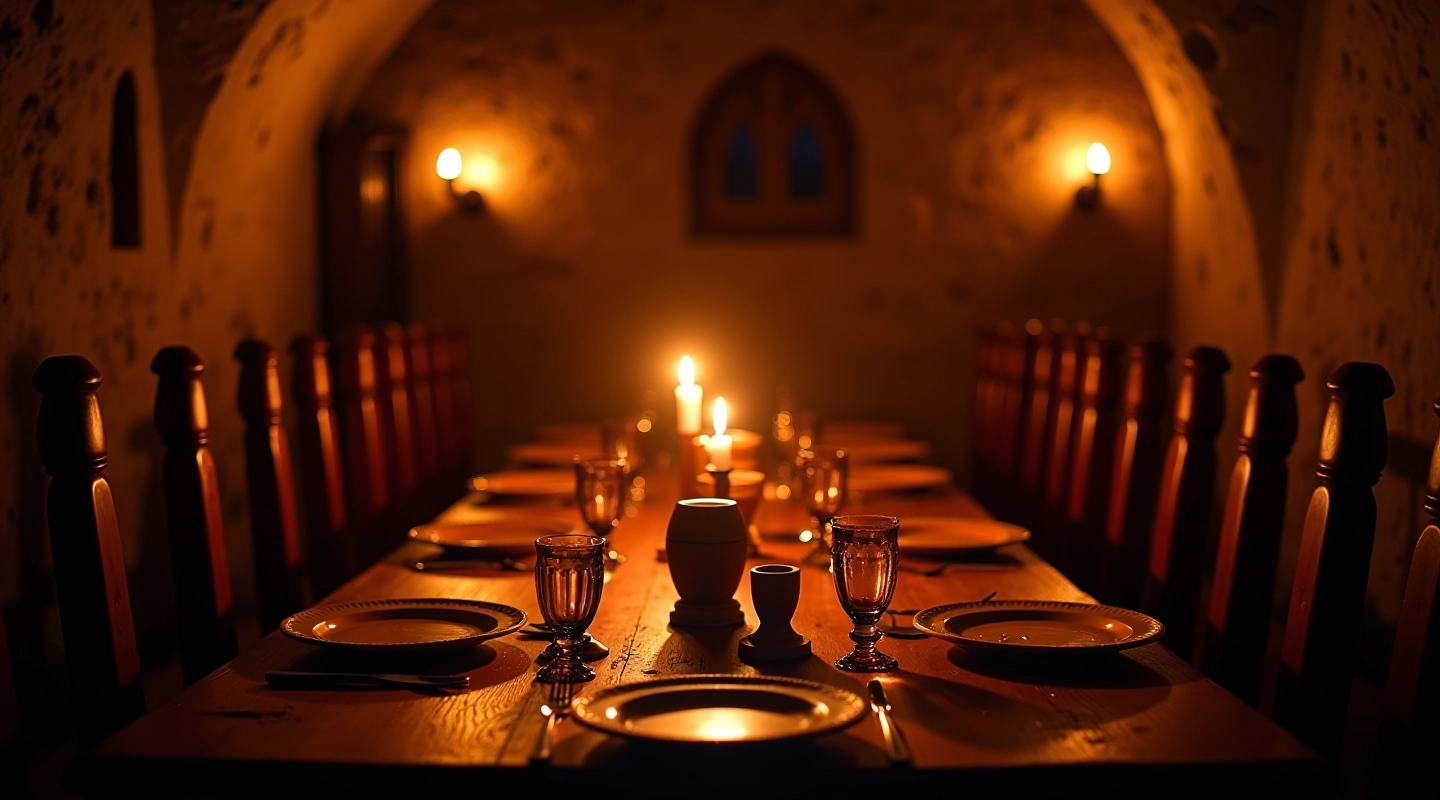
Planning Your First Medieval Feast Experience
Learn what to expect at an authentic medieval banquet, from dress codes to dining customs and etiquette.
Beneath the cobblestone streets of Old Town lies a fascinating underground world. These medieval cellars tell stories of merchants, craftsmen, and centuries of Tallinn's complex history. We'll walk you through what you'll actually see, how these spaces were built, and why they're still worth exploring today.
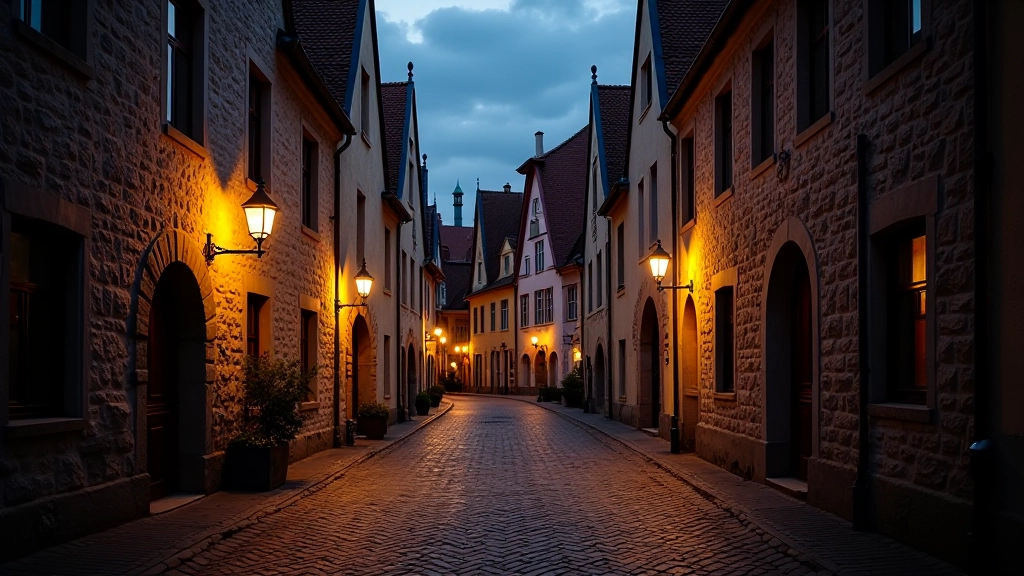
It's not just about old tunnels. These cellars are living architecture — they show you how medieval Tallinn actually functioned. Merchants stored goods here. Families sheltered during conflicts. The stone walls still bear marks from centuries of use.
The cellars you'll encounter during a medieval banquet experience aren't randomly preserved basements. They're carefully maintained sections that connect to the broader medieval city. Walking through them, you're literally stepping through layers of history — 14th century walls beside 16th century reinforcements, original medieval stonework touching later repairs.
These cellars aren't dug from bedrock. They're built INTO the buildings above them — an integral part of the structure from the ground up. That's what makes them so different from typical basement spaces.
The stonework you're looking at represents real medieval engineering. Without modern equipment, builders had to work with local stone — mostly granite from nearby quarries. You can see how different blocks fit together, sometimes imperfectly, showing the practical problem-solving of medieval craftsmen. Some sections still have original plaster, though most has worn away over 600+ years.
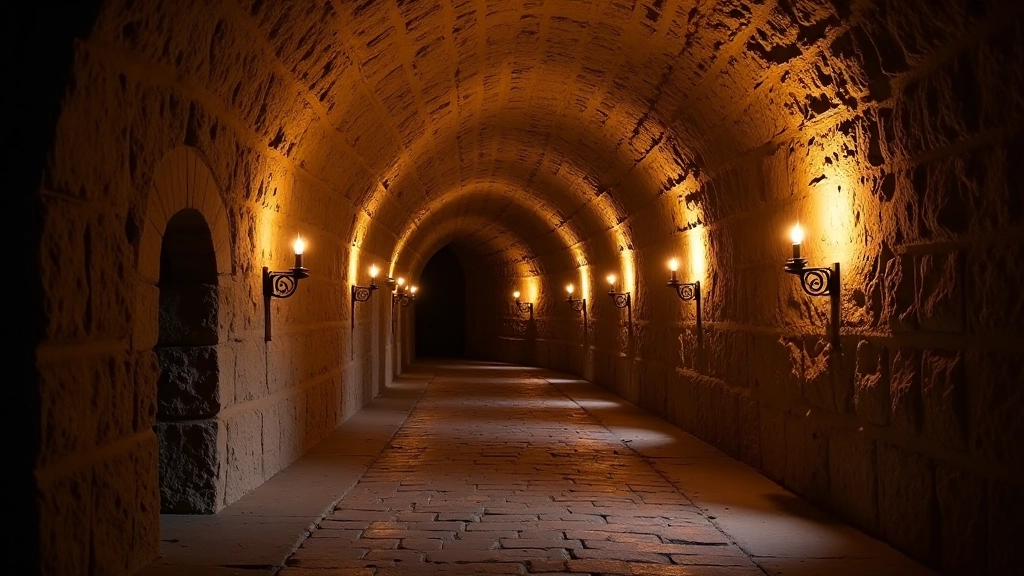
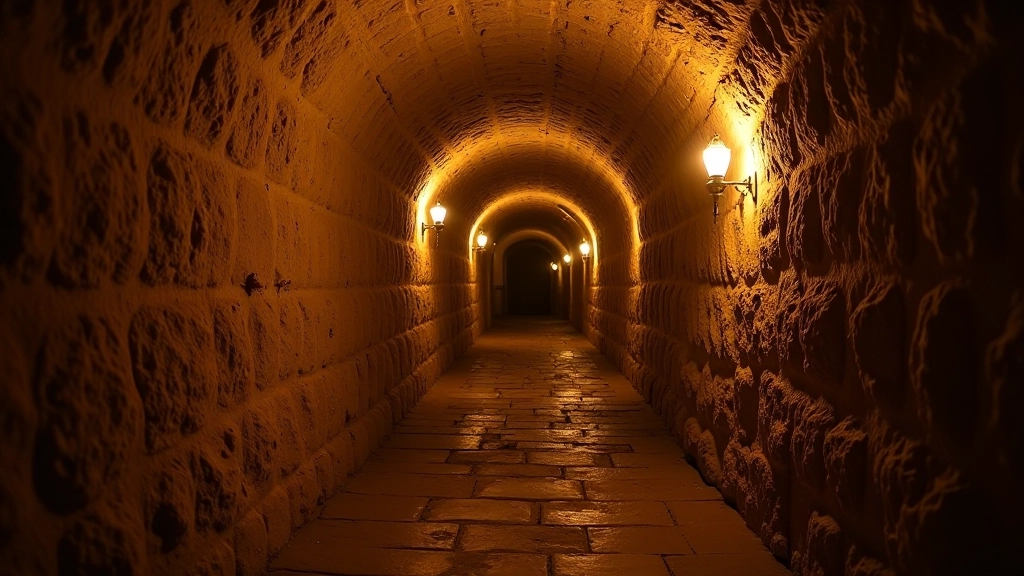
What surprises most visitors is how extensive these passages are. You're not just seeing one isolated cellar — you're moving through a network that connects multiple buildings and courtyards. Some passages are original medieval construction. Others were added later to improve access or connect new merchant houses to existing storage areas.
During a medieval banquet tour, guides typically walk you through 3-4 connected cellar spaces, covering roughly 150-200 meters of actual passages. The paths aren't straight — they curve around existing walls and obstacles, following the practical layout of medieval urban development. You'll move from storage cellars (wider, more open) into tighter passage areas (barely shoulder-width in places). This variation is intentional. Wider spaces held goods and materials. Narrow passages connected different sections and controlled movement.
The stone underfoot varies too. Some areas have original medieval flooring — worn smooth by centuries of footsteps. Others show later repairs with different stone types and construction methods. You're literally walking across different time periods as you move through the passages.
You descend stone steps worn by 600 years of use. The temperature drops noticeably — cellars maintain around 8-12°C year-round. The air smells like stone, moisture, and time. It's not unpleasant, just distinctly different from the street above.
The ceiling height varies between 2 meters and 2.5 meters — most people walk through without ducking, but taller visitors notice. The lighting is intentionally atmospheric during banquet experiences. Instead of bright modern lights, guides use lanterns and candles (safely placed, don't worry), recreating how merchants actually navigated these spaces 500+ years ago.
Walking these passages, you start understanding medieval Tallinn's real economy. These weren't just storage — they were vaults. Merchants kept valuable goods here: textiles, spices, furs, amber. The thick walls protected against theft and fire. The cool temperature preserved goods naturally. Some cellars even have original merchant marks carved into the stone — personal symbols that identified ownership and inventory.
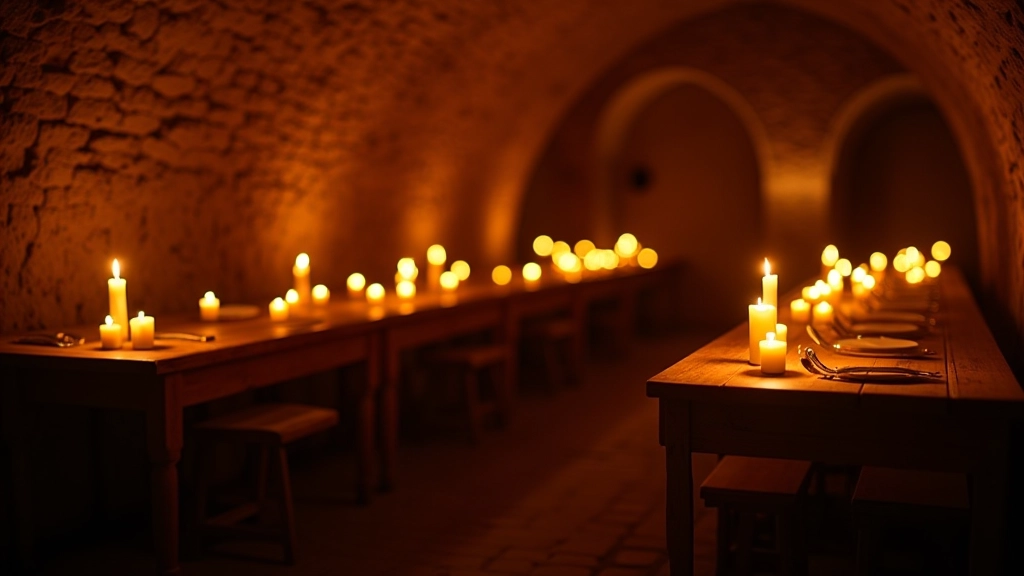
Most of what you'll see dates from the 14th-16th centuries. But here's what's fascinating: you can see the timeline in the stone. Earlier sections have a particular construction style — larger, less-finished blocks, more irregular patterns. Later additions show refinement — smaller stones fitted more carefully, different mortar compositions. Swedish occupation (1629-1710) left marks too. Russian period renovations added different materials. Each era modified, repaired, and adapted these spaces for its own needs.
Initial merchant houses built with cellar storage. Tallinn becoming a major Hanseatic trade center.
More connections between cellars, improved passages. Trade volume increasing — more storage needed.
Various occupations and conflicts required modifications. Some cellars sealed, others expanded. Medieval spaces reused for new purposes.
That's why guides spend time explaining what you're looking at. It's not just "old stuff underground." You're seeing actual medieval commerce, conflict, and adaptation written in stone.
This article provides educational information about Tallinn's medieval cellars and architecture. Specific measurements, dates, and historical details reflect current archaeological understanding and preservation practices. Actual cellar tours may vary in route, duration, and accessible areas depending on seasonal conditions, restoration work, and safety requirements. For detailed information about scheduled tours and current access, contact official Tallinn tourism providers or your medieval banquet event organizer. Always follow guide instructions regarding safety in underground spaces.
These cellars aren't just atmospheric backdrops for a medieval banquet. They're genuine historical structures that reveal how medieval Tallinn functioned. The thick walls, the passage networks, the varied stonework — all of it tells a practical story about merchants, trade, conflict, and survival.
When you walk these passages during a banquet experience, you're not just in a restaurant. You're in actual medieval infrastructure. That context transforms the experience. The candlelight makes sense — merchants relied on it. The low ceilings become less an inconvenience and more a reminder of medieval practicality. The stone walls aren't decoration. They're evidence of engineering that worked well enough to survive 600+ years.
Understanding this history doesn't require expertise. You just need to look carefully at what's around you and think about the people who built and used these spaces. That's the real medieval experience these cellars offer.
Editorial Team
Written by the sorboaxis editorial team, focused on honest, practical guidance for planning an authentic medieval banquet evening in Tallinn.
Learn what to expect at an authentic medieval banquet, from dress codes to dining customs and etiquette.
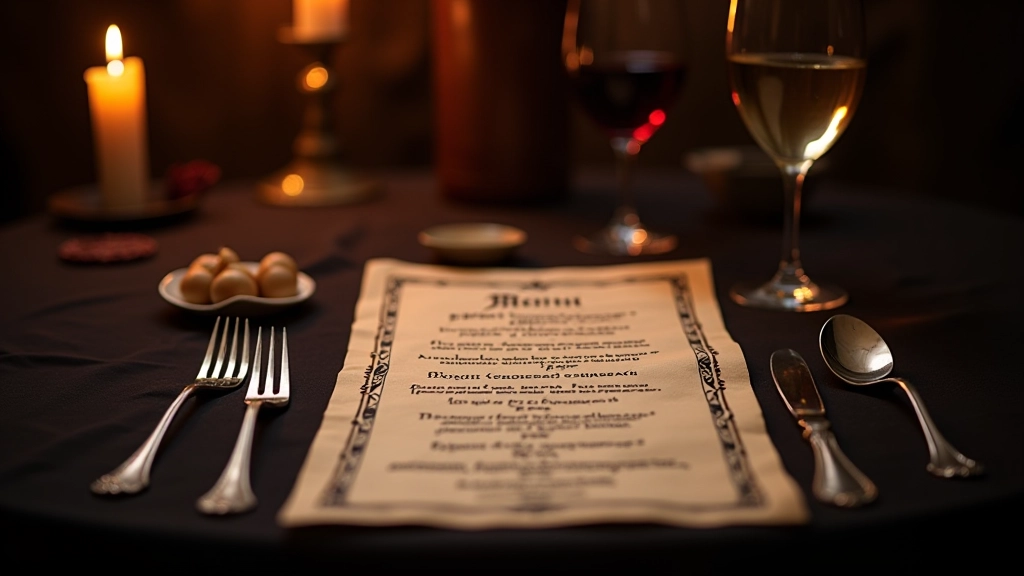
Understand what medieval people actually ate versus modern banquet interpretations and historical accuracy.

A practical guide to dressing for medieval banquets, including what's expected and historically appropriate choices.